Short answer: This list covers 19 popular vector artists. US names include Tom Whalen, Matthew Skiff, Chris Leavens, Christopher Lee and Yiying Lu, and international names include Yukio Miyamoto (Japan), Rod Hunt (London) and Cristiano Siqueira (São Paulo). Most work mainly in Adobe Illustrator, in styles from photorealism to retro posters.
Key takeaways
- 7 of the 19 artists on this list are based in the USA. The other 12 work in Japan, Europe, Latin America or the UK.
- Most of them build their final art in Adobe Illustrator, and many start with a pencil sketch.
- Styles range from photorealistic shading (Miyamoto, Paschke) to flat retro posters (Whalen, Domaradzki) and cartoon characters (Ball, Heald, Dorado).
- Their artwork is protected by copyright. Study it for ideas, but commission or license art for your own products.
- When you hire a vector artist, give the size, print method and color count up front. That brief decides whether the file prints cleanly.
Who are the most popular vector artists to follow?
Vector art is built from paths and shapes defined by math, not pixels, so it stays sharp at any size. That is why it shows up on posters, shirts, packaging, apps and signs. The artists below are some of the most widely shared names in vector illustration. We have marked where each one is based, because only some of them work in the US.
We picked them for a distinctive style and a body of work you can still find online. Each bio below was checked against the artist’s own site, a gallery or agency listing, or a published interview. Where we could not confirm a detail, we left it out.
All artwork shown belongs to the artist named in each section and is shown for commentary and review.
Swipe the table sideways on mobile to see all columns →
| Artist | Based in | Known for | Style | Where to see work |
|---|---|---|---|---|
| Yukio Miyamoto | Japan (Japanese-language books) | Photorealistic product renders | Gradient mesh realism | Core77 feature |
| Tom Whalen | USA | Mondo and Gallery 1988 posters | Retro poster, limited palette | Vannen interview |
| Niark1 (Sébastien Féraut) | France | Colorful monster art | Pop surrealism | Artsper gallery listing |
| Matthew Skiff | Colorado, USA | Band art and t-shirts | Retro horror | Vectortuts+ interview |
| Cristiano Siqueira | São Paulo, Brazil | ESPN 2014 World Cup posters | Bold sports art | Production Paradise |
| Christopher Lee | California, USA | Character and motion design | Retro cartoon | Vectortuts+ interview |
| Chris Leavens | Los Angeles, USA | Absurd creature scenes | Textured Illustrator art | Vectortuts+ interview |
| Charles Williams | London, UK | 3D type magazine covers | Isometric lettering | Typeroom feature |
| Grzegorz Domaradzki | Poznań, Poland | Alternative movie posters | Screen-print poster | JoBlo feature |
| Jonathan Ball | Cardiff, UK | Pokedstudio characters | Quirky character design | Adobe Blog feature |
| Jonny Wan | Sheffield, UK | Shape-led illustration | Graphic, symmetrical | Tuts+ author page |
| Susanne Paschke | Berlin, Germany | Photorealistic objects | Clean realism | Vectortuts+ interview |
| Ryan Putnam (Rype) | USA | Vectips, lettering | Warm, hand-made | Dropbox Blog profile |
| Jeff Finley | Ohio, USA | Go Media, WMC Fest | Illustration and design | Tuts+ author page |
| Rubens Cantuni | Italy | Tokyo Candies characters | Bold, funky color | Creative Bloq feature |
| Michael Heald | UK | Cartoon game characters | Cartoon | Vectortuts+ interview |
| Julian Dorado | Buenos Aires, Argentina | Typefaces monsters | Letterform characters | Vectortuts+ interview |
| Yiying Lu | San Francisco, USA | Twitter Fail Whale | Cute, friendly icons | beyond tellerrand bio |
| Rod Hunt | London, UK | Where’s Stig? book | Search-and-find, isometric | rodhunt.com |
Which of these vector artists are based in the USA?
Seven of the nineteen are US-based: Tom Whalen, Matthew Skiff (Colorado), Christopher Lee (California), Chris Leavens (Los Angeles), Ryan Putnam, Jeff Finley (Ohio) and Yiying Lu (San Francisco). The rest are international artists whose work is widely shared by US designers, so we kept them and marked their base.
Yukio Miyamoto
Based in: Japan (his books are published in Japanese). Yukio Miyamoto is known for photorealistic product renderings, such as cameras and musical instruments, drawn entirely in Adobe Illustrator. A Core77 feature shows him building these pieces from blends, gradients and the Gradient Mesh tool, not a 3D program.
He also wrote the Japanese-language book The Adobe Illustrator Super Guide. His work shows how far careful shading can push flat vector shapes: many people mistake his drawings for 3D renders or photos.


Tom Whalen
Based in: USA. Tom Whalen is an American illustrator and designer who works as StrongStuff. He is best known for posters for Mondo, Gallery 1988 and Bottleneck Gallery that reimagine classic films in his own style. He has also designed toy packaging and worked with Disney, Lucasfilm, Marvel and Hasbro.
He has named comic artists Jack Kirby, Steve Ditko and Todd McFarlane as early influences, and designers Saul Bass and Milton Glaser as people who shaped his approach at university.
His style blends illustration with graphic design: limited color palettes, strong typography and layered compositions built from simple geometric shapes.


Niark1 (Sébastien Féraut)
Based in: France. Niark1 is the working name of French artist Sébastien Féraut. He was born in Paris, and a Collater.al profile places him in Montpellier. Brands such as Converse and Bugaboo and musicians including Pharrell Williams have commissioned his work, and he has exhibited in Europe and the US.
He loves color, monsters and surreal scenes. His creatures, with wide eyes, sharp teeth and stretchy bodies, feel more playful than scary. He works in pencil, ink and paint on canvas as well as digitally, so not every piece is pure vector.


Matthew Skiff
Based in: Colorado, USA. Matthew Skiff is a vector illustrator and graphic designer who was born and raised in Colorado. He draws retro-flavored art with a soft spot for horror, such as skeletons, werewolves and zombies, built in Adobe Illustrator with a Wacom tablet.
His influences include 1980s cartoons, horror movies, video games and music. His career grew through t-shirt designs on the Emptees community, and he has made band art, including CD artwork for the band I Wrestled A Bear Once.


Cristiano Siqueira
Based in: São Paulo, Brazil. Cristiano Siqueira, known online as CrisVector, is an illustrator who focuses on sports art. His work uses bold lines, vivid colors and well-defined anatomy.
In 2014 he illustrated a poster series for ESPN covering every team in that year’s FIFA World Cup. The series won a Bronze at the 2015 Clio Sports Awards. His clients also include Nike, Under Armour, UFC and Gillette.


Christopher Lee
Based in: California, USA. Christopher Lee is an illustrator and designer from Sacramento, California. He earned a graphic design degree from CSU Sacramento in 2006.
In a Vectortuts+ interview he described working full time as an art director in motion graphics at Buck, while living in Burbank and freelancing on the side. Projects he named include work for Hasbro, Target and Nike ACG, plus a Honda illustration in his portfolio. Check his current portfolio for his latest role.
Nearly every piece starts as a pencil drawing, from rough thumbnails to a clean sketch, before he builds the final art in Adobe Illustrator. He cites 1950s and 1960s cartoon styling, animation background paintings and artists such as Charley Harper as influences.


Chris Leavens
Based in: Los Angeles, USA. Chris Leavens was born and raised in rural east-central Pennsylvania and later moved to Los Angeles. He holds a BA in film and video from Penn State and taught himself Adobe Illustrator.
He builds his pieces entirely in Illustrator, textures included. His scenes mix absurd humor, anthropomorphic animals and hybrid creatures, and they stay upbeat rather than dark.
In his Vectortuts+ interview he said his work sold out at his last two Los Angeles shows. He also took part in the Blood Sweat Vector show in Berlin and was featured by Göoo Magazine.


Charles Williams
Based in: London, UK. Charles Williams grew up in Manchester and now works in London. He is known for surreal, three-dimensional lettering built from isometric grids, continuous lines and interconnected forms.
His type illustrations have appeared in Science magazine and on the double cover of Creative Review’s The Annual, as well as in ad campaigns, branding and animation. He looks for letterforms that can survive being extruded, melted or exploded on an isometric grid.


Grzegorz Domaradzki
Based in: Poznań, Poland. Grzegorz Domaradzki is best known for alternative movie posters and collectible screen prints. He studied at Poznań’s Academy of Fine Arts and still lives and works in the city.
After his master’s degree he worked for several advertising agencies, then went freelance in 2005. His clients have included Marvel Studios, Warner Bros., 20th Century Fox and Paramount Pictures.


Jonathan Ball
Based in: Cardiff, Wales, UK. Jonathan Ball is an illustrator and animator and the founder of Pokedstudio, an illustration, design and animation studio. He is known for quirky character designs and dense, detailed worlds.
He names pop culture, video games, cartoons and Japanese illustration among his influences. His studio covers character design, game art, animation and posters for clients such as the BBC, MTV and Sony.


Jonny Wan
Based in: Sheffield, UK. Jonny Wan is a freelance illustrator who studied illustration at Manchester School of Art and graduated in 2008.
His style grows out of an interest in shape, color, texture and symmetry. The result is bold, graphic work that reads well at poster size.


Susanne Paschke
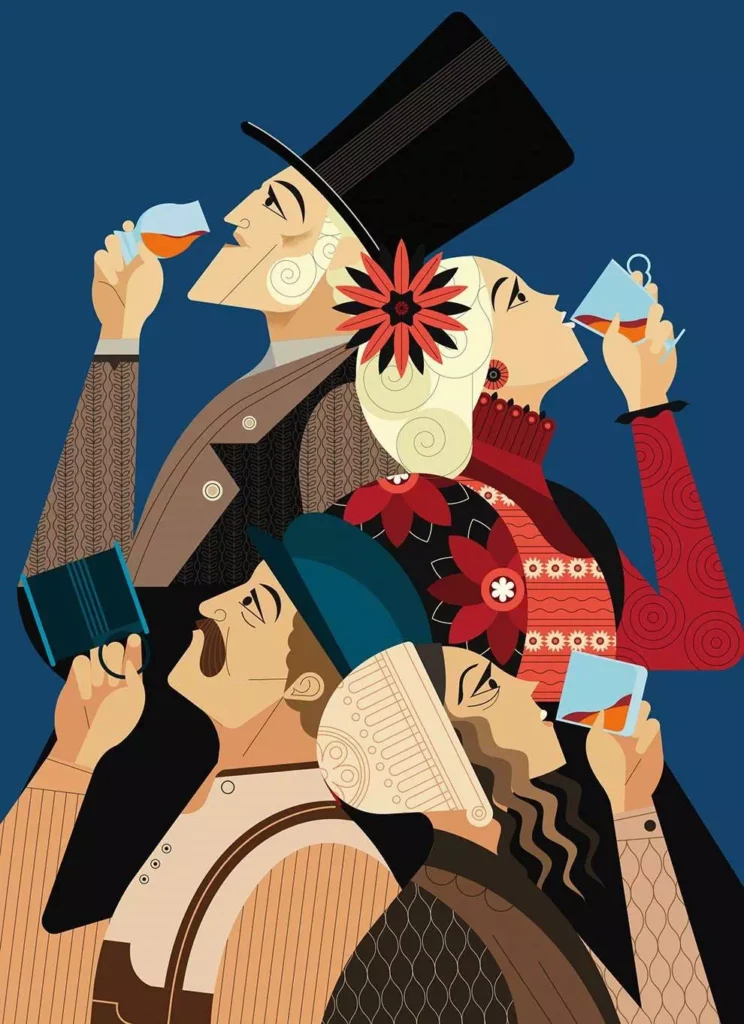
Based in: Berlin, Germany. Susanne Paschke is a freelance illustrator and designer known for clean, photorealistic vector illustration.
She builds soft color shifts from layered transparencies and gradients, then adds separate highlight and shadow shapes for depth. She worked in FreeHand for years before moving to Adobe Illustrator with a similar workflow.


Ryan Putnam (Rype)
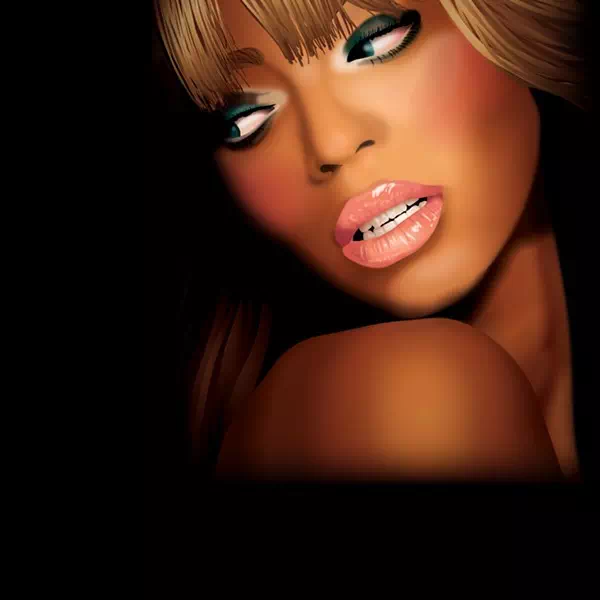
Based in: USA. Ryan Putnam is a designer and illustrator who runs Rype Arts and the vector resource sites Vectips and VectorMill, along with Amperbranch. He studied fine art with a concentration in graphic design.
Born in New Mexico, he worked from Colorado Springs before moving to San Francisco in 2013 to join Dropbox as a designer. He has said about 95% of his work happens in Illustrator, and his love of lettering and pottery shows in his warm, hand-made style.


Jeff Finley
Based in: Ohio, USA. Jeff Finley is an illustrator and designer from Ohio and one of three partners at Go Media, a creative agency. His background is in illustration and CG animation.
He is also known for building creative communities. He founded the Weapons of Mass Creation Fest, an art, design and music event, and writes about marketing and social media for designers.


Rubens Cantuni
Based in: Italy. Rubens Cantuni was born in Genoa in 1982. He works as an art director and as a freelance designer and illustrator.
His style is bold and funky, with bright colors, character illustration and toy design. He created the Tokyo Candies characters and has worked with Nike.


Michael Heald
Based in: UK. Michael Heald runs Fully Illustrated, a design studio that began as his portfolio site and now makes websites, character art and branding, mainly for small game companies.
He has said his heart lies with cartoon illustration, because bringing a character to life is the most rewarding part of the job. He also co-founded The Joystick Generals, a studio making 2D cartoon iPhone games.


Julian Dorado
Based in: Buenos Aires, Argentina. Julian Dorado is a graphic designer and illustrator who has drawn strange creatures since childhood. His best-known personal series, Typefaces, turns the letterforms of a single font into monsters, cute animals and other characters. He builds each one in Illustrator and adds detail in Photoshop.


Yiying Lu
Based in: San Francisco, USA. Yiying Lu was born in Shanghai, studied in Sydney and London, and now works in San Francisco. She designed the Twitter “Fail Whale” and the official dumpling emoji. She founded her own design studio in 2007 and has also taught at the University of Technology Sydney (UTS), covering type and editorial design.


Rod Hunt
Based in: London, UK. Rod Hunt is an illustrator known for detailed, character-filled scenes, search-and-find art and isometric maps. He illustrated Top Gear: Where’s Stig? for BBC Books, which his site says has sold more than 350,000 copies.
His client list includes IKEA, Vodafone, Royal Mail, Transport for London and the Financial Times. His site also lists awards from Cannes Lions, D&AD and the Society of Illustrators.


What makes vector art look professional?
Every artist above has a different style, but their files share a few habits. These are the same checks we use before a vector file goes to a printer, embroiderer or sign shop.
What we see in production: two problems stop commissioned illustrations at the print shop again and again. The first is hairline strokes that were never expanded, so they thin out or drop away when the art is scaled down for a left-chest print or a small sticker. The second is soft gradients and transparencies sent for screen printing or embroidery, which can only reproduce flat colors and need the art rebuilt as solid shapes. Both are quick to fix in the source file and costly to fix on press.
- Clean paths. Smooth curves with only the anchor points they need. Extra points cause lumpy curves and slow cutters and RIP software.
- Consistent line weights. Lines that match in thickness look deliberate. Very thin lines can vanish when the art is printed small.
- A planned color count. Screen printing and embroidery charge by color, so fewer, well-chosen flat colors often look better and cost less.
- Closed, joined shapes. No stray points, open paths or hidden overlaps. Text is outlined so fonts never go missing.
- Tested at real size. Check the design at the size it will actually print, such as a 3.5-inch left-chest logo or a 24-inch banner.
- The right formats. AI or EPS for most print shops, PDF for proofs and many printers, SVG for the web.
Need art that passes these print checks?
Our designers draw custom vector illustrations and characters from your sketch, photo or brief. You get clean, print-ready AI, EPS, PDF or SVG files sized for your print method. From $10 per design · exact quote by email after we see the file · 24-hour standard delivery.
For more on the basics, see what vector design is and our guide to vector line drawing.
How do you commission vector art?
Whether you hire a well-known illustrator or a production studio, a clear brief saves time and revisions.
- Collect references. Show styles you like, but ask for original work. Do not ask an artist to copy another artist’s piece.
- Describe the use. Say where the art will go (shirt, sign, package, web), the final size and the print method.
- Set the colors. Give the maximum color count or Pantone colors if you have them.
- Name the files you need. List AI, EPS, PDF, SVG or PNG so nothing is missing at the end.
- Confirm usage rights in writing. Agree on where and how long you can use the art, especially for products you will sell.
- Agree on revisions and timing. Know how many rounds of changes are included and when the files arrive.
Copy-and-paste vector art brief
- Use: t-shirt / sign / package / sticker / web
- Final size: width × height in inches
- Print method: screen print, DTF, embroidery, vinyl cut or digital print
- Colors: maximum count, or Pantone codes
- Style references: links, plus “original work only”
- Files needed: AI, EPS, PDF, SVG, PNG
- Usage rights: where, how long, and whether you will resell products
- Deadline and number of revision rounds
If you are on the other side of the deal and want to earn from your own illustrations, read how to sell vector art.
Vector Artists FAQ
Who is the most famous vector artist?
There is no single answer. Yukio Miyamoto is often cited for his photorealistic Illustrator work, and Yiying Lu’s Twitter “Fail Whale” may be one of the most widely seen vector characters. Poster artists like Tom Whalen and Grzegorz Domaradzki are well known among film fans.
Are there famous vector artists in the USA?
Yes. On this list, Tom Whalen, Matthew Skiff, Christopher Lee, Chris Leavens, Ryan Putnam, Jeff Finley and Yiying Lu are US-based. Many other well-known vector artists work in the UK, Europe, Japan and Latin America.
What software do vector artists use?
Adobe calls Illustrator its industry-leading vector graphics software, and most artists on this list use it. Inkscape is a free alternative. Some artists sketch on paper first or finish details in Photoshop.
Can I use a vector artist’s work on my t-shirts or products?
Not without permission. In the US, copyright protects a piece from the moment the artist creates and records it, and registration is optional. Ask the artist for a license, or commission original art made for your product.
How much does it cost to hire a vector artist?
It depends on the artist and the job. Well-known illustrators quote per project and usage. For production vector art, our vector art design service starts from $10 per design, with an exact quote by email after we see your file.
Send your sketch, get an exact quote
Send us a sketch, photo or idea and we will quote your custom vector art by email. From $10 per design.
- Exact quote by email before you pay (PayPal, Visa or Mastercard)
- 24-hour standard delivery, rush from 6 hours
- 2 free revisions
- 100% money-back guarantee
Sources
Sources checked October 27, 2026:
- Core77: Yukio Miyamoto Illustrator renderings
- PsPrint: Yukio Miyamoto showcase
- Vannen: Tom Whalen interview
- Illustrators Lounge: Tom Whalen
- Sideshow: Tom Whalen
- Collater.al: Sébastien Féraut
- Artsper: Niark1
- Envato Tuts+: Matthew Skiff interview
- Production Paradise: Cristiano Siqueira
- Clio Sports: ESPN 2014 World Cup posters
- Envato Tuts+: Christopher Lee interview
- Envato Tuts+: Chris Leavens interview
- Typeroom: Charles Williams
- JoBlo: Grzegorz Domaradzki
- Adobe Blog: Jonathan Ball
- Envato Tuts+: Jonathan Ball interview
- Envato Tuts+: Jonny Wan profile
- Envato Tuts+: Susanne Paschke interview
- Envato Tuts+: Ryan Putnam profile
- Dropbox Blog: Ryan Putnam
- Envato Tuts+: Jeff Finley profile
- Creative Bloq: Rubens Cantuni
- Envato Tuts+: Michael Heald interview
- Envato Tuts+: Julian Dorado interview
- beyond tellerrand: Yiying Lu bio
- Rod Hunt: about and clients
- Rod Hunt: Where’s Stig? book
- Adobe: Illustrator
- Inkscape: free design tool
- U.S. Copyright Office: general FAQ
Drafted with AI assistance and checked by our team against the sources listed above on October 27, 2026.